← Back to Insights
Juliette Camou
October 30, 2025

With sustainability now central to corporate strategy, organizations face pressure to demonstrate that ESG commitments translate into measurable impact. Certifications and assurance have become vital tools for showing verified results, transforming ESG reporting from mere compliance into a credibility story.
Today's stakeholders demand proof of action, not just statements. This is where sustainability certifications matter.
ESG certification represents third-party validation confirming that a company meets defined sustainability and ethical standards. Unlike self-reported disclosures, certifications include independent audits verifying claim accuracy, giving stakeholders confidence in genuine commitments.
Examples include ISO 14001 (environmental management systems), B Corp (social and environmental impact assessment), and LEED (sustainable building performance). Each provides tangible proof of responsible operations.
Beyond credibility, certifications deliver business benefits: 48% of U.S. consumers would modify purchasing to reduce environmental impact, and 86% expect companies to address social and environmental issues. Certification also ensures compliance with evolving regulations like the EU's Corporate Sustainability Reporting Directive, which mandates independent verification of ESG data.
Reporting involves sharing detailed sustainability information with stakeholders about commitments and achievements. Certification, conversely, is a formal third-party audit verifying practices against established standards.
These distinctions blur increasingly as certification programs incorporate reporting requirements.
No universal framework currently exists for ESG reporting. Instead, companies adopt established frameworks including:
An independent international organization providing the world's most widely adopted sustainability reporting standards, creating a consistent global language for environmental and social impact communication.
SASB developed 77 industry-specific standards helping companies disclose financially material sustainability information, with its Materiality Map clarifying industry priorities.
Created to increase climate-related financial risk transparency, TCFD guides companies in sharing information across four areas: governance, strategy, risk management, and metrics/targets.
Many organizations partner with CDP, a global nonprofit supporting environmental impact disclosure aligned with TCFD recommendations.
Certifications streamline regulatory compliance by aligning with laws and reporting frameworks. Carbon certifications require emissions tracking for both certification and mandatory reporting. Labor certifications like SA8000 and Fair Trade ensure human rights and supply chain transparency compliance.
As regulators increasingly crack down on greenwashing, third-party certification provides independent verification demanded by policies including the EU Green Claims Directive.
Certification involves a structured journey:
Integrating sustainability certifications into ESG reporting enhances credibility while transforming organizational sustainability communication. Certifications provide external proof, assurance validates accuracy, and ESG platforms ensure reliable, consistent data.
Together, they establish transparent, trustworthy, future-ready ESG reporting. With investors and regulators demanding action proof, certifications help organizations transition from promises to measurable results.
Get Aclymate's practical sustainability content delivered weekly.

AI is creating new opportunities for businesses, but it also comes with an environmental cost. Carbon offsets can help address some of those emissions, but businesses need to understand what they are offsetting, how offsets work, and why measuring and reducing emissions should come first.
Read Article
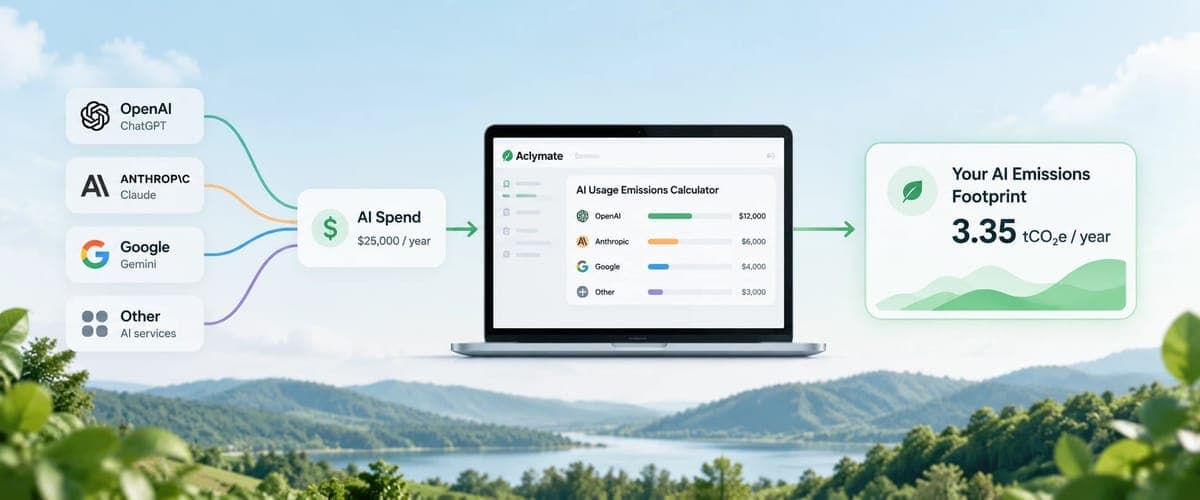
AI carbon emissions are becoming a new consideration for companies adopting ChatGPT, Claude, Gemini, Copilot and other artificial intelligence tools. Here’s how Aclymate estimates the carbon emissions from a company’s AI usage today—and how we expect the methodology to improve as AI providers release better usage and emissions data.
Read Article
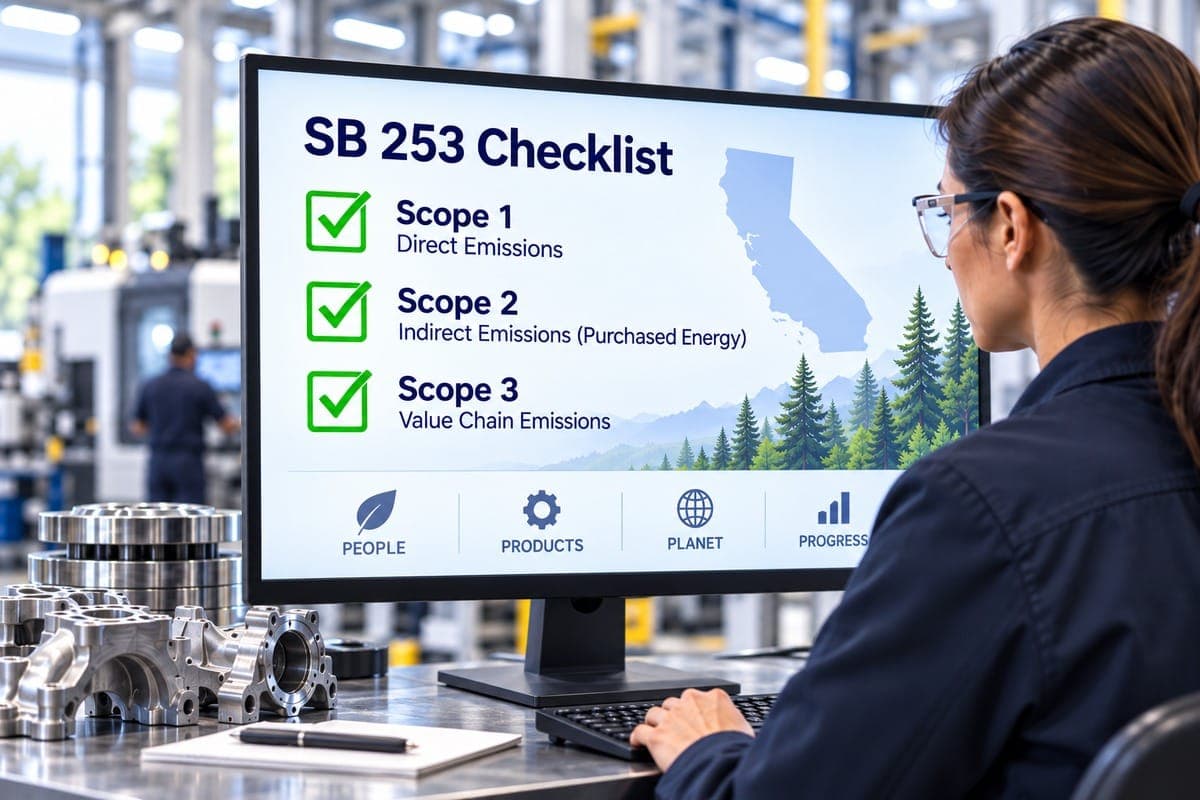
California SB 253 applies to companies over $1B in revenue — but its Scope 3 requirement reaches the automotive suppliers underneath them. What to expect and how to prepare.
Read Article
Talk with a Sustainability Expert, see a demo, or start free to put the Aclymate platform and experts to work for your team.