← Back to Insights
Juliette Camou
November 4, 2025
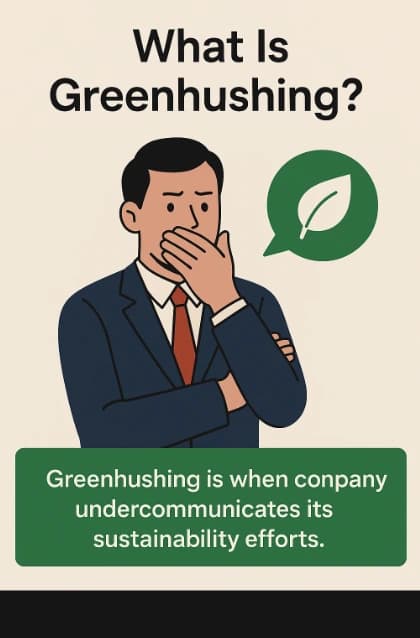
Greenhushing is when an organization intentionally hides or under-communicates its sustainability efforts, climate progress, or emissions reductions due to fear of criticism, scrutiny, or being accused of greenwashing.
Rather than overselling sustainability claims, greenhushing represents strategic silence—even when real progress exists. The term barely existed until recently, as the cultural and political landscape shifted to create hesitation around discussing genuine environmental achievements.
Greenhushing is rising because companies deliberately reduce communication about sustainability efforts due to multiple interconnected factors:
Example 1: A consumer goods manufacturer reduces emissions by 12% through energy efficiency but stays silent due to uncertainty about proper communication.
Example 2: A promotional products company earns a sustainability certification but withholds public announcement, fearing audit scrutiny.
Example 3: Organizations set internal climate targets but avoid public disclosure to prevent potential goal-miss consequences.
| Behavior | Definition | Primary Risk |
|---|---|---|
| Greenhushing | Under-communicating authentic progress | Competitive disadvantage, compliance gaps, eroded trust |
| Greenwashing | Exaggerating or misrepresenting claims | Legal exposure, reputational damage, public backlash |
Both stem from insufficient confidence in sustainability data and reporting processes.
Greenhushing creates substantial exposure for small and medium enterprises:
Overcoming greenhushing requires building data confidence and transparent communication processes:
Multiple frameworks now demand transparency, making silence increasingly risky:
Greenhushing creates equivalent harm to greenwashing. Silence leads to lost competitive positioning, weakened stakeholder trust, and compliance exposure. Through transparent carbon accounting and expert guidance, organizations can communicate sustainability progress with credibility and confidence.
Get Aclymate's practical sustainability content delivered weekly.

AI is creating new opportunities for businesses, but it also comes with an environmental cost. Carbon offsets can help address some of those emissions, but businesses need to understand what they are offsetting, how offsets work, and why measuring and reducing emissions should come first.
Read Article
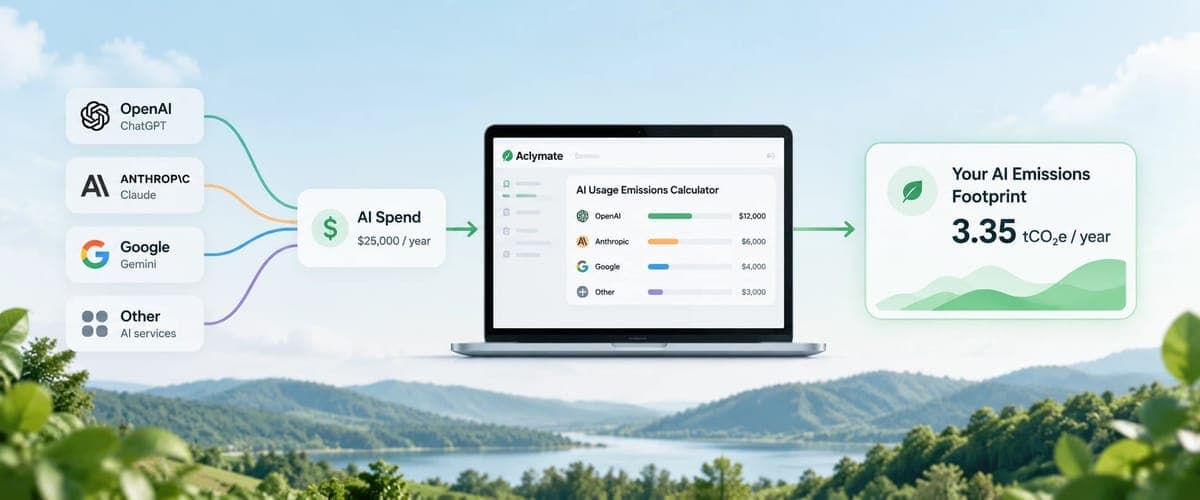
AI carbon emissions are becoming a new consideration for companies adopting ChatGPT, Claude, Gemini, Copilot and other artificial intelligence tools. Here’s how Aclymate estimates the carbon emissions from a company’s AI usage today—and how we expect the methodology to improve as AI providers release better usage and emissions data.
Read Article

California SB 253 applies to companies over $1B in revenue — but its Scope 3 requirement reaches the automotive suppliers underneath them. What to expect and how to prepare.
Read Article
Talk with a Sustainability Expert, see a demo, or start free to put the Aclymate platform and experts to work for your team.